Mindfulness for preschoolers – everyday moments of calm
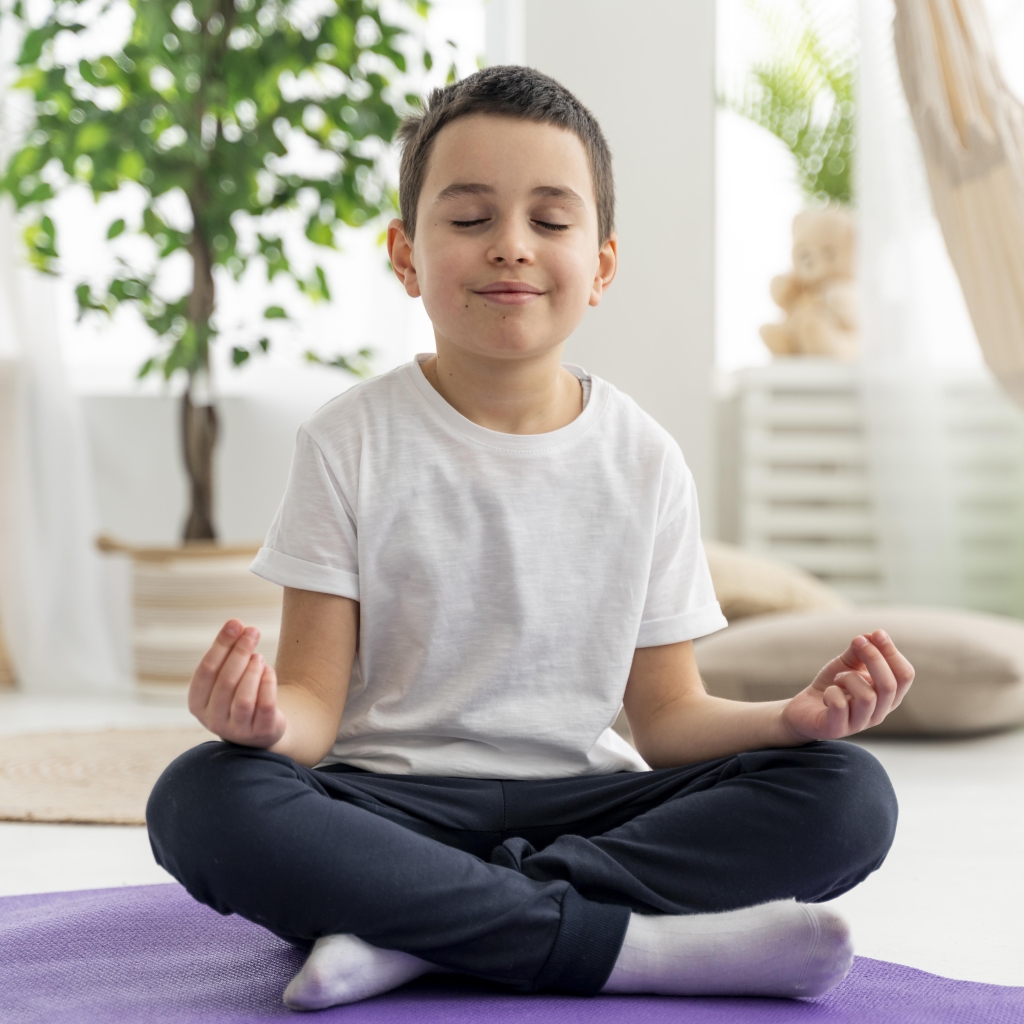
Mindfulness for preschoolers doesn’t mean sitting in silence for a long time or expecting a child to calm down straight away. In the preschool years, mindfulness is best introduced through short, playful experiences: watching the breath, listening to sounds, calm movement, using the senses and noticing signals from the body.
Moments like these can help a child pause after energetic play, get ready to rest and gradually discover ways to ease tension. They don’t replace an adult’s closeness or specialist support when it’s needed, though. What matters most is that it’s voluntary, suited to the child and practised regularly at calm moments.
What is mindfulness for a preschooler?
Mindfulness means paying attention to what is happening right now: the breath, body movement, a sound, a smell, a touch or an emotion. For a young child it isn’t an abstract exercise, but a short experience linked to play and a concrete activity.
A preschooler can practise mindfulness when they:
- watch a feather moving,
- listen to the sound of a little bell until it fades away,
- notice how their feet touch the floor,
- move slowly to calm music,
- describe the colour, smell and texture of an object,
- listen to a short story that guides their imagination.
The aim isn’t to remove all emotions. Anger, sadness, excitement and fear are still natural. But mindfulness can help a child notice what is happening in their body and discover tools they can come back to with an adult’s help.
When to offer your child a moment of calm
Short practices fit best into the transitions between activities. You can offer them after energetic play, before rest time, after coming back from a walk or before an activity that needs calmer attention. A regular moment in the day makes the exercise predictable.
It’s worth teaching these techniques when your child is relatively calm. During very strong emotions they may not be ready to listen to instructions or focus on their breath. At that moment they first need safety, an adult’s presence and fewer distractions.
Not every child calms down in the same way. One finds lying on a mat helpful, another needs slow movement, rocking or a moment in a quieter place. Watching how your child responds matters more than doing a particular exercise perfectly.
You can read more about supporting a child through strong feelings in our article “How to support your child’s emotions in difficult moments”.
Breathing exercises – short and playful
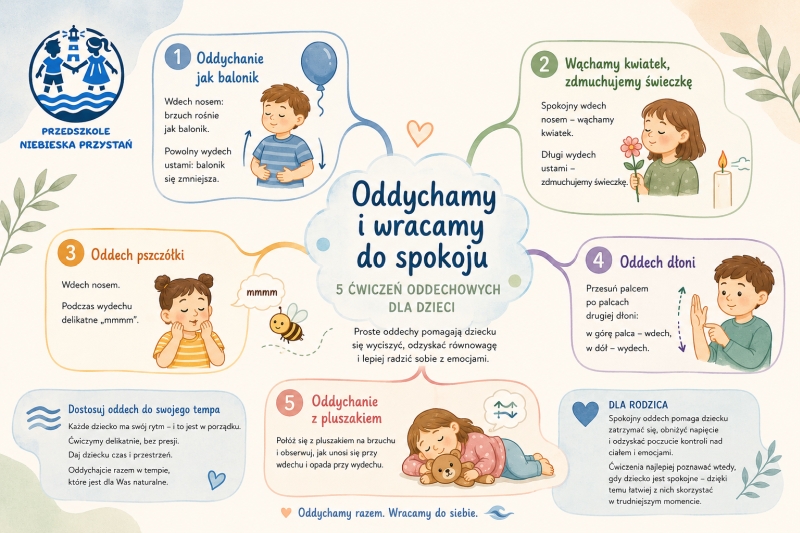
The breath is always there, so it can become a simple point of focus. But a child shouldn’t be made to breathe very deeply, hold their breath for long or do many repetitions. A few calm, comfortable breaths are enough.
At Niebieska Przystań we use playful images and objects that help a child understand the exercise:
- Blowing a feather – the child tries to move it with a gentle, long breath out.
- Smelling a flower – a calm breath in through the nose, then a relaxed breath out.
- Candle and wind – a gentle breath out, as if moving a flame without blowing it out.
- Balloon in the tummy – the child puts a hand on their tummy and watches it gently move.
The adult does the exercise together with the child and shows a calm pace. Instead of saying “Calm down and breathe”, you can invite them: “Shall we try to move the feather together?”. Doing it together sounds less like an order and doesn’t suggest that the child’s current emotions are wrong.
Mindfulness through music, movement and the senses
Not all children feel comfortable sitting still. For a preschooler, movement can be a natural way to focus attention. Slow dancing, stretching, walking to music or copying a swaying tree let children notice their bodies without having to stay still.
Among other things, we use:
- The dancing leaf – children move lightly and more and more slowly, like a leaf falling to the ground.
- A sound walk – the group listens to instruments, sounds of nature or the sounds around them.
- Musical freeze – when the music stops, children notice their body position and breathing.
- Exploring an object – the child describes its colour, temperature, weight and texture.
These exercises combine mindfulness with the natural need to be active. They can also be a gentle transition from energetic activity to a calmer task.
You’ll find more about alternating movement and focus in our article “Concentration in preschoolers – 5 simple ways”.
Rest, stories and noticing the body
After lunch or during afternoon rest time, you can offer a short relaxation story. The child can lie on a mat, sit or find another comfortable position. They don’t have to close their eyes – for some children, looking around feels safer and more comfortable.
The story could be about a little cloud floating across the sky, a warm ray of sunshine or a calm boat trip. Along the way, the adult gently guides attention to the hands, legs, tummy and breath, without judging what the child should feel.
It’s best to avoid statements like “Now you’re definitely calm”. A better question is “What do you notice in your body?”, or a neutral message: “You can rest for a moment and listen”. The child may still be stirred up and doesn’t have to reach a particular state for the exercise to be worthwhile.
An everyday example
After an energetic movement game, the group is about to listen to a story. Instead of expecting the children to sit still straight away, the teacher invites them to play “falling leaves”. The children move more and more slowly and then choose a comfortable spot.
The teacher gently strikes a little bell and asks everyone to listen to the sound for as long as they can. The whole thing takes less than a minute. This short sequence helps mark the change of activity without requiring the same reaction from every child.
How to introduce mindfulness without pressure
Mindfulness shouldn’t be a punishment for being loud or a condition for rejoining the group. A message like “Go and breathe because you’re misbehaving” can make a child associate the exercises with shame and rejection.
These principles help:
- start with less than a minute or a few minutes,
- offer the exercise, but don’t insist on closing eyes or lying down,
- show the activity by doing it yourself,
- let your child choose between two ways of calming down,
- stop the exercise if you see clear discomfort,
- don’t judge who was “the calmest”.
For some children, a quiet sound, closing their eyes or focusing on body signals can feel unpleasant. Then it’s worth offering an alternative: a calm walk, looking at a book, arranging objects or sitting next to a trusted adult.
How to create a calming routine at home
Practice at home doesn’t have to be a separate “mindfulness session”. It can become a short part of everyday life: a calm breath before bed, listening to sounds on a walk or a moment of stretching after coming home from preschool.
The easiest way is to start with one fixed moment and one activity. For example, after the evening story, parent and child can take three calm breaths with a hand on the tummy. If your child doesn’t feel like it, you can simply say: “I’m going to take a moment to breathe calmly. You can join in or just listen”.
A predictable order makes it easier to use the techniques you’ve learned. You can read more about creating flexible rituals in our post “A child’s daily routine – how to create a calm rhythm to the day”.
What can you do today?
Choose one short exercise and treat it as a game you play together, not a task to get right.
- Listen to one sound until it has completely faded away.
- Move a feather with a calm, long breath out.
- Go for a slow walk and name three sounds you hear.
- Put on calm music and move like falling leaves.
- Notice body signals: feet on the floor, hands and the movement of the tummy.
- Ask your child which way of resting they enjoy most.
Don’t expect an immediate effect. Your child is only just discovering different ways to rest and ease tension. They learn most through short, repeated experiences and by watching a calm adult.
FAQ – parents’ most common questions
Is mindfulness suitable for preschool children?
Yes, if the exercises are short, voluntary, playful and suited to the child’s abilities. A preschooler doesn’t need to sit in silence for long. Mindfulness can take the form of calm movement, listening to sounds, observing an object or a few comfortable breaths.
How long should a mindfulness exercise for a preschooler last?
At first, less than a minute or a few minutes is enough. It’s worth matching the length to your child’s age, interest and mood. Regular, short practice is usually more suitable than demanding long concentration.
Which relaxation exercises are suitable for young children?
You can use blowing a feather, calm breathing with a hand on the tummy, listening to a little bell, slow movement to music, exploring with the senses and short relaxation stories. Exercises should be safe and must never require holding the breath for long.
What if my child doesn’t want to join in the calming time?
Don’t force them. Offer an alternative, such as slow movement, looking at a book, a calm walk or sitting next to an adult. You can also do the exercise yourself and let your child just watch.
Are breathing exercises enough when my child is very angry?
Not always. During very strong emotions a child may not be ready to follow instructions. First they need safety, an adult’s calm presence and fewer distractions. It’s best to teach the exercises earlier, when your child is calm, so they can gradually get to know the ways available to ease tension.
Want to know more?
If you’re looking for a preschool that looks after children’s everyday wellbeing, helps them notice their needs and discover safe ways to calm down and rest, come and get to know Niebieska Przystań Preschool.
💙 From Niebieska Przystań 💙
Short moments of mindfulness come up naturally during our day – and we help every child discover the ways of calming down that feel safe and comfortable for them.