Why does music matter in a preschooler’s life?
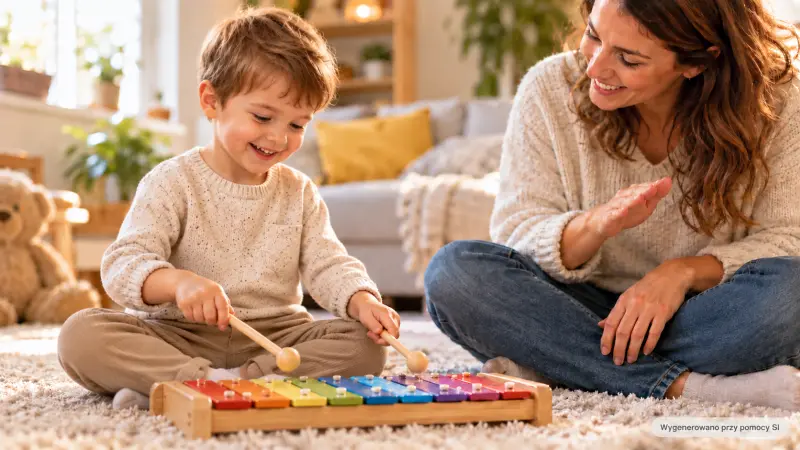
A child sways to the rhythm before they can walk, and hums their first songs before they can say a full sentence. Music is with them from the very beginning and feels completely natural to them.
It’s worth knowing why music matters so much in a preschooler’s life. Singing together or dancing in the kitchen helps a child learn to speak and cope with emotions.
Music is one of the simplest ways to support a preschooler’s development every day. All you need is your voice and a little time.
📌 In this article you’ll learn:
How music helps a child learn to speak
Songs and rhymes are great listening practice for a child. Repeated choruses and a clear rhythm help them hear the sounds that words are made of. A child singing a simple train song is practising pronunciation and breathing at the same time.
A melody also makes things easier to remember. Sung words stay in the head longer than spoken ones, which is why children learn song lyrics so quickly. The same applies to learning a second language. We write more about how we combine Polish and English during the day in our article Bilingual education every day.
Why rhythm organises movement
Clapping and marching to music teach a child to control their own body. To keep to the beat, you have to listen and move at the same time, which is quite a challenge for a preschooler. Over time, their movements become smoother and they develop better balance and coordination.
Music-and-movement games also teach children to stop on a signal. When the music goes quiet, everyone freezes like a statue. For a child it’s great fun, and they practise patience and attention along the way.
How music helps children experience emotions
Music can calm us down or give us energy. A gentle lullaby before bed helps a child wind down, and a lively song in the morning gives them strength for the new day. This way a child learns that they can have some influence over how they feel.
Music also helps name feelings. You can ask: “Is this song happy or sad?” or “How do you feel when you listen to it?”. It’s a simple way into talking about emotions, which we write more about in our post How to support your child’s emotions in difficult moments.
An everyday example: Antek doesn’t like tidying up his toys, and every evening it takes a long time to persuade him. So his mum makes up a “tidy-up song”: a simple tune they sing together while putting the blocks back in the box. After a few days, Antek starts humming it himself when he sees it’s time to tidy up. Tidying still isn’t his favourite thing, but it goes much more smoothly and with a smile.
What singing together in a group teaches
Singing in a group means listening to others. You have to start together and keep the same tempo. This is how children learn to cooperate, often without any words at all.
A shared song also gives a sense of belonging. A child who knows their group’s songs feels part of it. Shy children often find it easier to join in a song than in an ordinary conversation, because their voice doesn’t sound alone.
What music at preschool looks like every day
At Niebieska Przystań, children have music with Ms Dorota three times a week. On top of that there are rhythm sessions and other music activities. Music is with the children every day too: music-and-movement games are a regular part of the day, and songs help them move from one activity to the next – for example from playing to a meal. We sing in Polish and in English, so children get used to hearing the second language in a natural way.
For us, music is also play. Instruments and rhythm games are a chance to learn by doing, which we write about in our article Learning through play – how it supports a child’s development.
What can you do today?
- Sing one song with your child, even if you don’t remember all the words
- Make up a tune together for an everyday task, such as brushing teeth
- Make a simple instrument from a box and rice, or play a saucepan with a spoon
- Dance together to your child’s favourite song
Frequently asked questions
From what age is it worth singing with a child?
From the very first days of life. A baby calms down to a familiar voice and melody, and a two-year-old starts singing the ends of words. It’s never too early or too late to start.
Do I need to be a good singer to sing with my child?
No. What matters most to your child is your voice and the time together. A parent singing off-key with a smile does more for a child than the best recording.
Is it enough for my child to listen to music from a speaker?
Listening is valuable too, but a child gains the most when they join in themselves: singing or playing a simple instrument. Music in the background is a nice extra, but making music together gives a child much more.
Does music help with learning English?
Yes. Songs with simple lyrics and a repeated chorus let a child get used to new words without effort. Children often sing English phrases before they start using them consciously.
My child doesn’t want to sing in a group. What should I do?
Give them time. Many children listen and watch for a long time first, and only start singing at home, where they feel relaxed. It’s worth inviting them to join in, but not pushing. Clapping or swaying to the rhythm is taking part in music too.
Want to know more?
If you’d like to see what music looks like at our preschool every day, we’ll be happy to tell you about it at a meeting. Enrolment for the 2026/2027 school year is open.
💙 From Niebieska Przystań 💙
At our preschool, even tidying up toys has its own song.