When should your child start learning English?
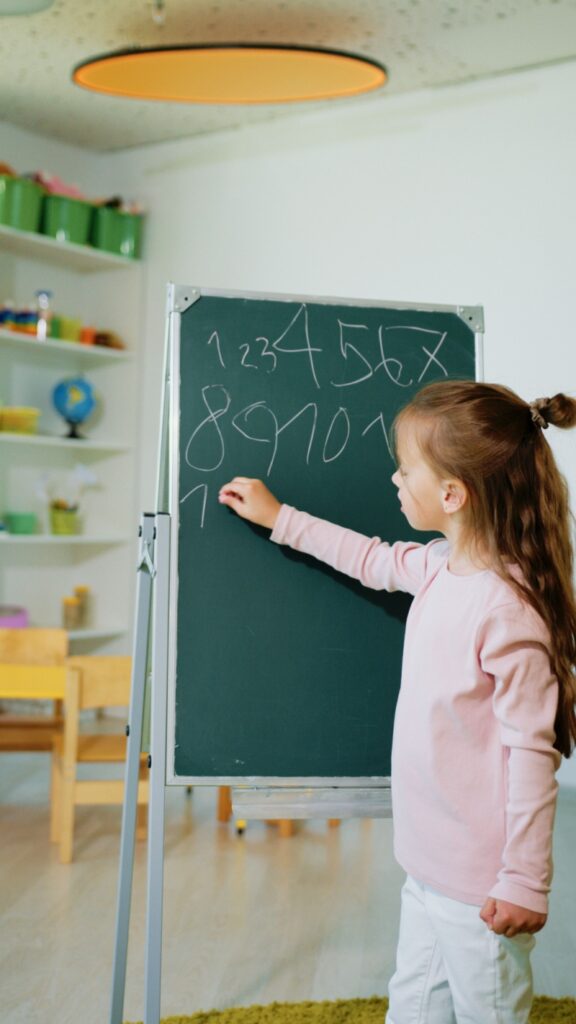
Many parents wonder when it’s worth starting to learn English with their child and whether the preschool years are the right time. Young children can get used to a second language very naturally – through play, songs, movement, books and everyday situations. They don’t need school-style lessons or long lists of words to memorise.
Starting early isn’t a race, though, and bilingualism doesn’t appear after a few sessions. What matters most is regular contact with the language, hearing it in a context the child understands, and a sense of safety. A child should have space to listen, watch and try things at their own pace, without pressure to speak straight away.
📌 In this article you’ll learn:
When is it worth introducing a second language?
A child can get used to a second language from a very young age, especially if it is naturally present in the family or their surroundings. The preschool years are also a good time to start. Children love imitating the sound, rhythm and intonation of a language, and they easily link new words with a movement, an object or a specific situation.
That doesn’t mean there is a single age limit after which learning stops working. A language can be learned at any stage of life. Early contact simply gives more time to get used to hearing it and using it in different situations.
The quality of contact matters more than starting as early as possible. Short but regular and engaging communication can be more valuable than a long lesson that doesn’t suit the child’s age. Learning should be built on relationships, repetition and a context the child understands.
Bilingualism or learning English – what are we actually developing?
In everyday language the word “bilingual” is used very broadly. Yet regular English sessions, daily contact with a second language and growing up in a family that uses two languages are not exactly the same experience.
A child may understand much more than they can say. They may know some words only in English and others only in Polish. They may also use each language with different people or in different situations. A child doesn’t need to use both languages equally well to benefit from a multilingual environment.
That’s why we don’t judge progress only by the number of words a child says. We also look at how they understand what is said to them, how they respond to instructions, how they join in songs and games, and how ready they are to use the language spontaneously.
How do we teach English at Niebieska Przystań?
At Niebieska Przystań, English is present both in learning activities and in everyday situations. Every group has an English teacher who is with the children during play, meals, walks, music sessions and the daily routine.
This way the language isn’t just a subject to learn. It becomes a tool for real communication. Children hear short, repeated phrases linked to what is happening, for example:
- “Good morning!” – when we greet each other,
- “Let’s clean up” – when we tidy up together,
- “Wash your hands” – before a meal,
- “Put on your shoes” – before going out,
- “Time to play” – when playtime starts.
We use age-appropriate materials, but we don’t limit learning to a textbook. We show the meaning of words with gestures, movement, pictures, objects and actions. A child doesn’t need every phrase translated if they can understand it from the context.
Why do play, music and movement help with language learning?
Preschoolers learn best when they are active participants, not just listeners. A song links words with melody and rhythm, an active game lets children act on what they hear straight away, and acting out little scenes gives what they say a real purpose.
During these activities children hear the same expressions many times, but the repetition isn’t boring. The same phrase can come up in a song, a game, a conversation at the table and while getting ready for a walk.
Examples of activities include:
- songs with gestures and pointing to parts of the body,
- games where children follow simple instructions,
- rhymes and counting-out games,
- short dialogues with hand puppets,
- naming colours and objects during play,
- looking at picture books and telling stories together.
We write more about why hands-on experience works so well at preschool age in our article “Learning through play – how it supports a child’s development”.
An everyday example
While getting ready for a walk, the teacher says: “Put on your shoes” and points to the shoes at the same time. At first the child watches the others and responds to the gesture. After many similar situations, they understand the phrase without any extra hint, and over time may say themselves: “My shoes!”.
Learning happens without quizzing and without interrupting a natural activity. The words have a clear meaning, come up regularly and lead to action. It is exactly this kind of context that helps a child gradually build understanding and the courage to speak.
Is mixing Polish and English natural?
A child learning more than one language may combine them in one sentence, for example: “Look, mama, kotek!”. This kind of mixing doesn’t have to mean confusion. The child is using all the words they have to get their message across.
Over time they learn which language to use with which person and in which place. Development isn’t always even – one language may be stronger at home, another during certain activities at preschool.
There’s no need to correct every sentence or ask the child to repeat it right away. An adult can respond with a natural, correct sentence that builds on what the child said. If the child says “Dog biegnie”, you can answer: “Yes, the dog is running!”. This way they hear the correct model without feeling embarrassed.
How can parents support English at home?
You don’t need to speak perfect English or turn your home into a classroom. Above all, it’s worth talking with your child in the language you feel comfortable in and in which you can build a rich, natural relationship. Your home language remains an important foundation for communication and for learning further languages.
You can strengthen contact with English in simple ways:
- listen together to songs your child knows from preschool,
- read short picture books,
- name colours or objects while playing,
- repeat a few set phrases in everyday situations,
- let your child tell or show you what they have learned,
- enjoy their attempts to communicate without correcting every mistake.
Regularity matters more than length. A few minutes of a shared song or book can build positive associations if your child enjoys it. Fixed moments in the day also help, because children can more easily predict when a certain phrase or song will come up.
If you’d like to bring in these activities without creating a rigid plan, see also: “A child’s daily routine – how to create a calm rhythm to the day”.
You’ll find more about supporting attention during short activities in our post “Concentration in preschoolers – 5 simple ways”.
Can a second language delay speech development?
Contact with more than one language does not in itself cause speech or language difficulties. Multilingual children go through the same basic stages of communication development, although their vocabulary may be spread across the languages they use. That’s why it’s worth counting all the words a child uses in every language.
If a real language difficulty is present, it usually shows up in all of the child’s languages, not just in English. If you have any concerns, it’s worth talking to a speech therapist or neuro-speech therapist with experience of working with multilingual children. There’s no need to give up a language that matters to your family just out of fear that your child is hearing too many.
Every child develops at their own pace. We look at their communication as a whole: gestures, understanding, contact with others, attempts to express their needs and the development of skills in both languages.
What can you do today?
Introducing English doesn’t require an elaborate home programme. Start with a short, enjoyable activity and let your child get used to the language without having to repeat anything.
- Choose one song with simple gestures and listen to it together.
- Introduce one set phrase, for example “Good morning” or “Time to sleep”.
- Look at a picture book together and name a few familiar objects.
- Link a word with an action, a gesture or a specific object.
- Don’t push your child to repeat – understanding often comes before speaking.
- Appreciate every attempt to communicate, even when your child mixes languages.
The aim isn’t to achieve perfect pronunciation quickly or to know as many words as possible. What matters most is building ease, curiosity and the belief that a second language is for connecting with people and discovering the world.
FAQ – parents’ most common questions
When is the best time to start learning English with a child?
A child can get used to a second language from a very young age, but the preschool years are also a good time to start. Regular contact, a context the child understands, the quality of communication and activities suited to the child’s age and interests matter more than a specific starting date.
Can learning two languages delay speech development?
Contact with several languages does not in itself cause speech or language difficulties. A child’s vocabulary may be spread across the languages they use, so it’s important to look at their communication as a whole. If difficulties show up in all languages or you have other concerns, it’s worth talking to a suitable specialist.
Is it normal to mix Polish and English words?
Yes. A child may use words from different languages in one sentence. This doesn’t have to mean confusion – it often shows that they are using all the resources they have to get their message across. Over time they usually get better at matching the language to the person and situation.
How can I support English at home if I’m not fluent?
You don’t need to hold long conversations. You can listen to songs together, look at picture books, repeat a few simple phrases and join in games your child knows from preschool. In your everyday relationship, keep using the language you feel comfortable in, so you can give your child rich communication.
Is daily contact with English better than occasional sessions?
Regular contact gives a child more chances to hear, understand and use the language in different situations. It doesn’t have to be long – repetition, a natural context and engagement are what count. When the language is part of play and everyday activities, it becomes a tool for communication rather than just something to memorise.
Want to know more?
If you’re looking for a preschool where English is a natural part of everyday life and children learn through play, relationships, music and movement, come and get to know Niebieska Przystań Preschool.
💙 From Niebieska Przystań 💙
We create a safe space where a child can first listen, then respond, and then use English more and more boldly in real conversations.