My child doesn’t want to go to preschool. Why the crisis after a few weeks?
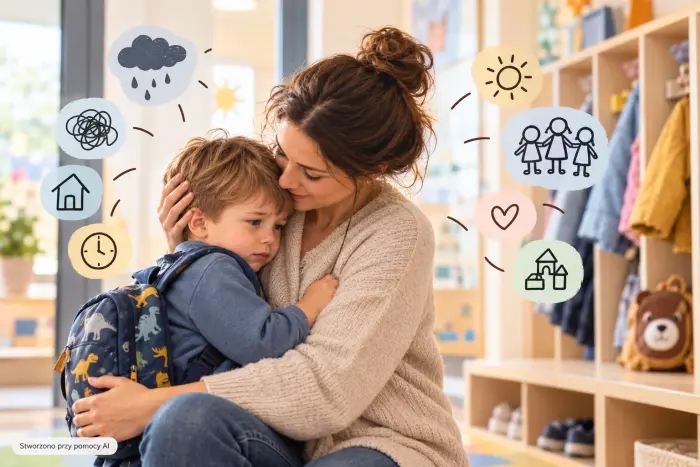
The first days were full of curiosity, and now every morning you hear “I’m not going!”. Many parents are surprised, because settling in seemed to be behind them.
When a child doesn’t want to go to preschool after a few weeks, it’s usually a natural stage. The first excitement fades and the child starts to feel that preschool is everyday life, not a short adventure.
A morning protest doesn’t mean preschool is a bad place. Most often it’s the child’s way of saying they need more support when saying goodbye.
📌 In this article you’ll find out:
Where the crisis after a few weeks comes from
At the beginning everything is new: the toys, the classroom, the other children. After a few weeks the novelty wears off and the effort remains. Your child has to get up early, say goodbye to you and spend several hours in a group.
Often it’s only then that a child really understands preschool is something permanent. It’s a good moment to go back to the tried-and-tested ideas from the settling-in period, which we describe in the article Settling in at preschool.
What your child is trying to say with a morning “no”
Sometimes it’s missing you, sometimes it’s tiredness or a small difficulty, such as a squabble with a friend or a new rule in the group. A preschooler can’t always put it into words, so they simply say “I don’t want to”.
It helps to ask in a calm moment in the evening: “What was fun today?” and “What was hard?”. Conversations like these help you understand what’s behind the morning protest. You’ll find more ideas in the post Why talk to your child about emotions?.
How to prepare a calm morning
Rushing adds to the emotions. It helps to get clothes and the backpack ready the evening before and to get up a few minutes earlier. A child who isn’t being hurried gets through the morning more easily.
A picture plan of the morning also works well: getting dressed, breakfast, brushing teeth, leaving the house. Your child can see what comes next and tick off each step themselves.
Why a short goodbye works best
Long goodbyes in the cloakroom usually make the crying last longer. It’s better to have your own short ritual, for example a hug, a kiss and “see you after lunch”. It’s important to always tell the truth and never sneak out.
Most children calm down a few minutes after the parent leaves. You can ask the teacher for a quick update during the day on how your child is doing. That reassures the parent too.
An everyday example: For a week, Staś cried at the classroom door. His dad came up with a “magic hug”: three big squeezes and the words “hang in there, buddy!”. After a few days Staś was reaching out for the hug himself and going off to play much sooner.
When it’s worth talking to the teacher
If the protests go on for several weeks or your child seems different at home, for example sleeping worse or being very irritable, it’s worth talking to their teacher. The teacher sees how your child gets on during the day and can suggest what helps.
At Niebieska Przystań groups have no more than 14 children, so teachers know each child well. There is also a psychologist at the preschool whom you can talk to if you need extra support as a parent.
What can you do today?
- Get clothes and the backpack ready the evening before
- Come up with a short goodbye ritual together
- Ask in the evening about one good and one hard moment of the day
- Tell your child exactly when you’ll pick them up
Frequently asked questions
Is it normal for a child not to want to go to preschool after a few weeks?
Yes. It’s a common stage once the first excitement fades. Usually, after a few weeks of calm, predictable mornings, the protests ease off.
Should I stay longer in the cloakroom when my child cries?
It’s better to say goodbye briefly and calmly. A long parting usually makes the crying last longer. Most children calm down quickly after the parent leaves.
Can I slip out while my child is distracted?
Better not. Sneaking out can make your child more watchful at the next goodbye. A short, honest goodbye builds trust.
Should I keep my child at home when they protest a lot?
Once in a while it does no harm, but staying at home regularly tends to strengthen the protest. Predictability is what helps your child.
When is it worth looking for extra support?
When the protests last a long time or your child clearly seems different at home. Then it’s worth talking to the teacher or the preschool psychologist.
Want to know more?
If you’d like to find out how we support children during morning goodbyes, we’ll be happy to tell you about it at a meeting.
💙 From Niebieska Przystań 💙
Every morning “see you later” is met here with a smile and a warm word.