Competition in the group: when your child wants to be first
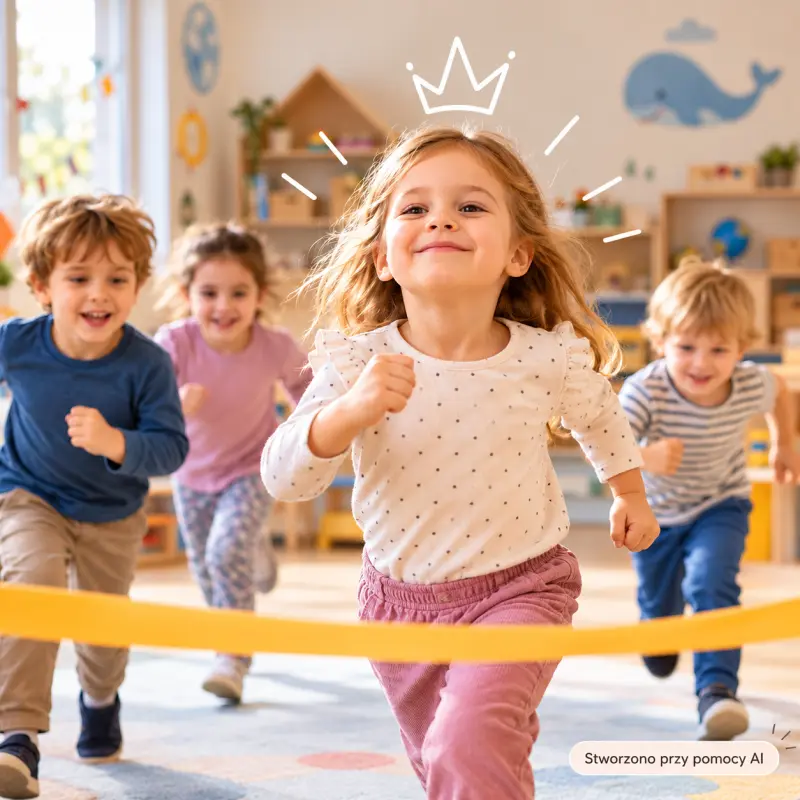
“Me first!”, “I’m the best!”. In a preschool group these phrases come up every day – on the way out to the playground or to the cloakroom. For a parent it can be tiring, and sometimes worrying.
Yet competition at preschool is an ordinary stage of development. A child is only just learning that they can lose and still be liked, and that someone else’s success doesn’t take anything away from them.
A child who wants to win is learning something important: that their efforts matter. Adults’ role is to help them get through both winning and losing.
📌 In this article you’ll learn:
Where a preschooler’s need to be first comes from
Around the age of three or four, children start watching their peers closely. Who runs faster, who put their shoes on first. Comparing themselves helps them understand what they can already do and what they’re still working on.
Then there’s the way of thinking typical of this age. A preschooler sees the world mainly from their own point of view, so “being first” simply means “being important” to them. A child can’t yet look at the situation through the eyes of the friend standing behind them in the queue.
Why losing hurts so much
For an adult, losing at a memory game is a trifle. For a five-year-old, it can be a blow to their sense of being good and liked. A child often doesn’t yet separate the result of a game from themselves, so “I lost” sounds in their head like “I’m worse”.
That’s where the tears, the thrown game pieces or the sudden “I don’t want to play any more” come from. Behind such a reaction there is usually anger mixed with sadness. We write about how to help a child when emotions are already very strong in our article How to support your child’s emotions in difficult moments.
How to respond when your child says “I’m the best”
The first instinct is often to correct the child: “Don’t show off” or “Other people are good too”. These phrases rarely help, because the child mainly hears that their joy isn’t welcome. It’s better to appreciate the effort rather than the win itself: “I saw how hard you tried with that tower”.
After losing, it’s worth naming the emotion first and only then talking about the game. You can read more about why naming feelings works so well in our post Why is it worth talking to your child about emotions?
An everyday example: Zosia loses a board game to her dad and sweeps the pieces off the table. Her dad doesn’t start with a telling-off. He says calmly: “You really wanted to win and now you feel sad”. Zosia nods and sulks for a little longer. After a few minutes her dad adds: “I feel sad sometimes when I lose, too. Shall we play again, or would you rather build with blocks?”. Zosia chooses a rematch. This time her dad loses and says with a smile: “Good game, well done”. The child sees for herself how you can lose and stay in a good mood.
Games where everyone is on the same team
A good counterbalance to constant races are games where the whole group has a shared goal. For example, building one big structure out of blocks, or cooperative games where everyone wins or loses together against the board.
In games like these, a child enjoys the joy of success, but nobody has to be last. They also learn that helping a friend brings them closer to the goal rather than further away. The same works at home: tidying up toys together “before the song ends” gives the fun of winning without any losers.
What competition at preschool looks like in our group
At Niebieska Przystań groups have no more than 14 children, so teachers can see clearly how each child copes with winning and losing. When things get heated during a game, we help children name their emotions and find words instead of pushing or shouting.
We arrange the order in everyday situations so that everyone gets to be first sometimes – for example through helper duties or drawing lots. This way “going first” stops being a prize you have to fight for. Children quickly notice that their day will come too.
What can you do today?
- Praise your child’s efforts and ideas, not just the result
- Play games with your child where they sometimes lose to you
- Show how you react to losing yourself, for example by saying “good game”
- Bring in games at home where the whole family has a shared goal
Frequently asked questions
Is it normal for a preschooler to always want to be first?
Yes. Between the ages of 3 and 6, children compare themselves with others intensively and test what they can do. The desire to win is very strong at this time and eases as the child learns to cope with losing.
Should I let my child win at games?
Sometimes, yes – especially with younger children, so the game is enjoyable for them. But it’s good for your child to lose to you sometimes too, because at home, with someone close, it’s easiest to learn that losing isn’t the end of the world.
What should I say when my child cries after losing?
First name what they’re feeling, for example: “You feel sad because you wanted to win”. Only when the emotions have settled can you talk about what was fun in the game itself, or suggest a rematch.
How should I respond when my child laughs at a friend who lost?
Calmly stop the situation and ask how they would feel in their friend’s place. It’s also good to show another way: “You can say: good game”. Children quickly pick up phrases like this when they hear them from adults.
When is it worth talking to a teacher or psychologist about competitiveness?
When the need to win doesn’t ease for a long time and makes your child avoid playing with others or very often end games in anger. Talking to the teacher helps you see how your child behaves in the group, and the preschool psychologist can suggest specific ways to support them.
Want to know more?
If you’d like to see how we teach children to win and lose in our groups, we’ll be happy to tell you about it at a meeting. Enrolment for the 2026/2027 school year is open.
💙 From Niebieska Przystań 💙
At our preschool, every child has their day at the front of the queue.