Screens and smartphones for young children – how to set sensible rules
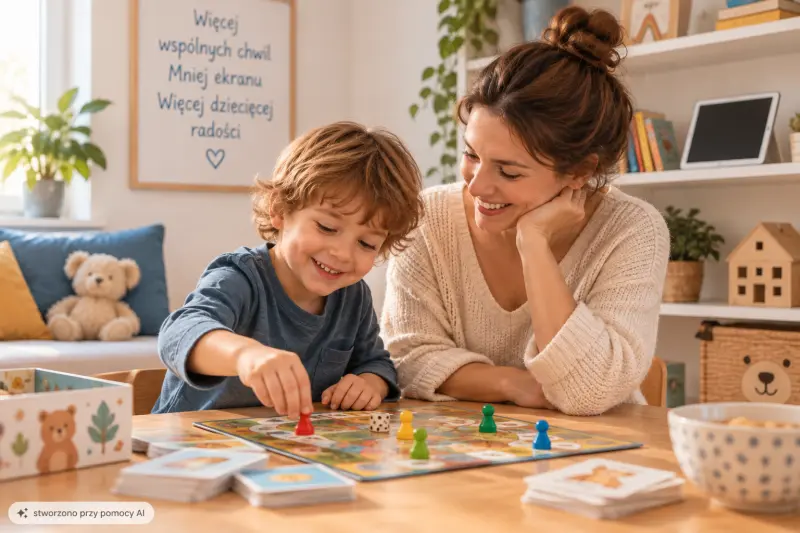
A cartoon while you cook dinner, a phone on a long journey, a tablet on a Sunday morning – screens at home are something parents of preschoolers ask us about very often. How much is “just right”? When is it better to put the phone away? And what can you offer instead of a cartoon?
It’s not about cutting out cartoons or apps completely — it’s about deciding consciously how much and when.
A cartoon when dinner needs cooking. A phone in the car when you still have two hours to go. A tablet on a Sunday morning so the parents can stay in bed a little longer. Sound familiar?
Screens are part of our children’s lives. But it’s good to check from time to time how much space they take up in your child’s whole day.
If there’s time for running around, building with blocks, chatting, being silly with parents, a book before bed and a simple “I’m bored”, the tablet stays just one of many things your child does during the day.
📌 In this article you’ll learn:
How much screen time for a preschooler?
An hour a day is a good guide, but it’s not about counting every minute. One longer viewing isn’t a problem. Look instead at your child’s whole day. If it’s full of play, movement, conversation and time with others, the screen remains just one of many activities.
What your child watches also matters. One calm cartoon is different from dozens of short videos that play one after another.
If you can, sit next to them sometimes. You don’t have to watch every cartoon together. From time to time you can ask:
– Why did he get angry?
– Which character do you like best?
– Do you remember when we did something like that?
A cartoon can then become the start of a conversation or an idea for a game later on.
Not just “how much?”. “When?” matters too
Half an hour of cartoons after coming home from preschool isn’t the same as half an hour on the phone at dinner or just before falling asleep.
Some moments of the day are best left screen-free. A shared meal is one of them. Your child can tell you what happened at preschool, listen to the adults talking or simply eat in peace.
The same goes for the evening. Before bed, a book, building with blocks, a bath or a calm chat work well.
You don’t have to change all your household habits at once. You can start with one simple rule:
“No phones at the table.”
It’s easiest to keep if it applies to the whole family.
How to set rules without daily negotiations
It’s easier for a child to follow rules when they know what to expect.
If one day they hear “OK, one more cartoon”, the next day they don’t watch anything, and the day after they get the phone during lunch, it’s hard for them to understand what the rule actually is.
A steady rhythm is simpler for a preschooler.
It could be:
- a cartoon after the afternoon snack,
- one episode instead of “watch for a bit”,
- no phone while eating,
- no tablet before bed.
You don’t have to bring everything in at once. One rule you can really stick to works better than a long list everyone forgets after a few days.
It’s also good to let your child know that watching is about to end:
– One more episode and then we switch off.
or:
– Five more minutes and we’re finishing.
Your child may still say “No!”. They may be unhappy and want to keep watching. But the warning tells them what is about to happen.
An everyday example:
Imagine that a cartoon comes on every day while a parent is making dinner. Sometimes it’s one episode, sometimes two, and sometimes the phone stays with the child until everyone sits down at the table. So the child starts asking for a cartoon as soon as they get home.
The parents can simplify things and agree: “You can watch one episode while we’re making dinner. Then we put the tablet away and eat together.”
The child then knows when they can watch a cartoon and when it’s time to stop. The parent also doesn’t have to work out every day how much more to allow.
Do parents have to put their phones away too?
For adults today, the phone is a tool for work, calls, shopping, banking, maps and keeping a calendar. We use it many times a day.
At the same time, children watch very closely what we do.
If we say:
– Put the tablet away, we’re eating now.
while answering messages throughout the meal ourselves, the rule becomes unclear to the child.
So it helps to choose a few moments when we really put our phones away. It could be dinner, a board game, reading a book or half an hour of playing together.
“Switch off the tablet”. Now what?
This can be the hardest part.
Your child has just been watching a colourful cartoon where something was happening every second. We switch off the screen and say:
– Go and play.
And they reply:
– But I don’t know what with.
A parent doesn’t have to organise the next activity. Sometimes it’s enough to have easy access to:
- blocks,
- crayons and paper,
- plasticine,
- a board game,
- puzzles,
- figures or toy cars.
You can make dinner together, build a blanket fort or go out on the bike. You can also leave your child a moment to come up with their own idea.
A child doesn’t need every minute organised.
“I’m bored” doesn’t mean a parent has to find something to do straight away. Sometimes after a few minutes of boredom, a cushion den appears, or a shop made of blocks, or a restaurant where a teddy bear orders soup.
This is often exactly what learning through play looks like. The child comes up with an idea, changes it, tries things out, builds and thinks up new solutions.
If you’re wondering how to support a child who finds it hard to stick with one game for a bit longer, have a look at our article on concentration in preschoolers.
And if one day there’s more screen time?
There are days like that. Your child is ill. You’re driving for six hours. It’s been raining since morning. A parent has an important online meeting. Or everyone is simply tired.
On that day there may be more cartoons.
The next day you can go back to your usual rhythm. What most of the week looks like says much more about family habits than one afternoon spent with a tablet.
What’s it like at Niebieska Przystań?
A preschool child has loads to do without a screen.
There’s a tower to build that’s about to fall over. A deal to make with a friend about who gets to drive the bus first. Something to paint that, to an adult, looks like a green blob, but to its creator is a dragon. Running. Singing. Listening to a story. Asking “why?” a dozen times.
At Niebieska Przystań these are exactly the experiences that matter most to us: conversation, movement, music, creating, relationships with other children and free play.
Technology is part of the world children are growing up in. But in the preschool years, an especially large amount happens during real play, movement, conversation and contact with other people.
What can you do today?
Start with one thing that suits your family best.
- From today, we don’t bring phones to the table.
- In the evening we put screens away earlier and read a book.
- Instead of “just a bit longer”, we agree on one episode.
- We switch off autoplay for the next videos.
- Once a week we get out a board game.
- When your child says “I’m bored”, we give them a moment to find their own idea.
One small change that stays with you for a long time makes more sense than a list of rules that are hard to keep.
Parents’ most common questions
How much time can a preschooler spend in front of a screen?
An hour a day is a good guide, but it’s not about counting every minute. Look at your child’s whole day: how much movement, play, conversation, sleep and time with others it includes.
Is a cartoon every day too much?
What matters is how long your child watches, what kind of content it is, and what they do for the rest of the day. One episode of a cartoon in a day full of other activities is different from a screen being on for much of the day.
My child doesn’t want to switch off the cartoon. What should I do?
Agree beforehand when watching ends, and give your child a warning. They may be unhappy because something they enjoyed is ending. Calmly remind them of the rule you agreed and move on to the next part of the day.
Is it OK to give my child a tablet on a long journey?
A long journey or an illness is a different situation from an ordinary day at home. If your child watches more than usual then, you can go back to your everyday rhythm afterwards.
What can I offer instead of the phone?
Blocks, drawing, plasticine, puzzles, a board game, cooking together, role-play or going outside. But you don’t always have to offer a ready-made activity. A moment of boredom often gives a child space to invent their own game.
Would you like to see what a day at Niebieska Przystań looks like?
Come and visit our preschool in Wilanów. We’ll show you the rooms, tell you what the children’s day looks like and answer your questions.
💙 From Niebieska Przystań 💙
Children don’t need entertainment for every minute of the day.
Sometimes some blocks, a few cushions, a blanket and a little time are all it takes to invent their own adventure.